
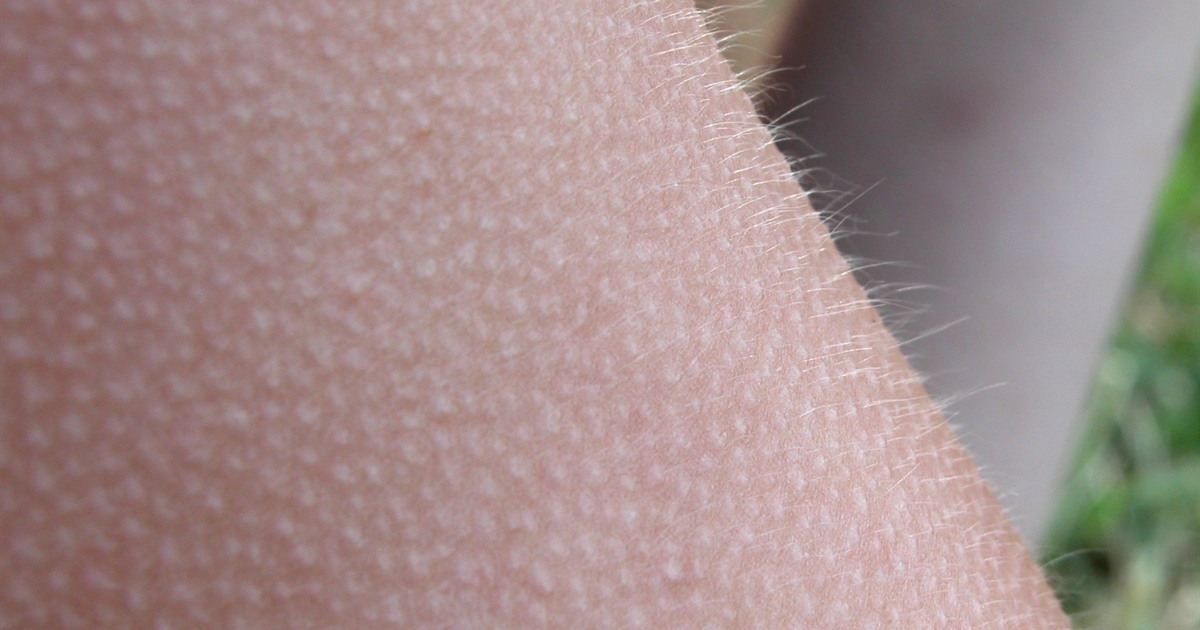

A familiar piece of music can raise the hairs on your arms, change your heart rate and produce a wave of pleasure or sadness. Scientists call it frisson, or aesthetic chills. It is not one phenomenon: recent research distinguishes “vigilance chills” tied to awe and anticipation from “social chills” tied to being moved and empathy.
The song reaches a certain chord, or a voice enters, or the bass drops out, and the skin on your arms prickles. The hairs stand up. A shiver runs down the back of your neck. The feeling is brief, physical, and oddly specific: you can often predict the exact moment it will arrive.
Scientists call it frisson, or aesthetic chills. It is not a metaphor. It is an autonomic response, with measurable changes in heart rate, skin conductance, breathing, and the tiny muscles attached to your hair follicles. It is also not a single thing. The experience can be triggered by music, film, speech, visual art, or a memory. The body’s response is real; the explanation is still being assembled.
The first thing to understand is that goosebumps are not a music mechanism. They are a skin reflex that music has learned to borrow.
The oldest part of the response
Each hair on your body sits in a follicle. Attached to the follicle is a tiny bundle of smooth muscle called the arrector pili. When the muscle contracts, it pulls the hair upright and puckers the skin around it. That is a goosebump.
The reflex is controlled by the sympathetic nervous system, the branch of the autonomic nervous system that prepares the body for action. Cold, fear, and strong emotion can all trigger it. In animals with thick fur, the response has obvious uses: erect hair traps a layer of warm air, and it can make an animal look larger to a threat. In humans, the fur is mostly gone. The muscle remains.
For a long time, the human goosebump was treated as a pure evolutionary leftover. Charles Darwin, in The Expression of the Emotions in Man and Animals, noted that the bristling of human hair under fear “can hardly be understood, except on the belief that man once existed in a much lower and animal-like condition.” The hardware was still there, but the function seemed to have vanished.
A 2020 study in Cell complicated that story. Working in mice, researchers led by Ya-Chieh Hsu at Harvard found that the arrector pili muscle anchors sympathetic nerve fibers that connect to hair follicle stem cells. Cold triggers goosebumps in the short term and, through that same unit, helps drive hair regeneration over the longer term. The study is a mouse study, not a study of human musical chills. But it is a reminder that “vestigial” does not always mean “functionless.”
What happens in the brain
Music-induced chills have been studied for decades. A foundational 2001 PNAS experiment used positron emission tomography to scan people listening to music they had chosen because it reliably gave them chills. Anne Blood and Robert Zatorre found that chill intensity correlated with blood-flow changes in the insula, orbitofrontal cortex, thalamus, supplementary motor area, and cerebellum—regions involved in reward, emotion, and arousal.
A 2011 Nature Neuroscience study used PET and a dopamine receptor tracer. It found dopamine release in the striatum during both the anticipation of a musical peak and the experience of the chill. People were not just reacting to a sound; they were predicting it, and the prediction itself was rewarding.
That fits a broader view of how music works in the brain. Music is built from patterns, and the brain is constantly predicting what will come next. A chord progression can set up an expectation, delay it, complicate it, and then resolve it. The chill may be a physiological signature of that prediction being confirmed, violated, or resolved in a particularly satisfying way. It is not simply “beautiful sound”; it is a moment of meaning in a temporal pattern.
A 2016 study in Social Cognitive and Affective Neuroscience used diffusion tensor imaging to compare people who frequently get chills with those who do not. The chill group had greater white-matter connectivity between auditory association regions and emotion/reward areas, including the anterior insula and medial prefrontal cortex. The sample was small, and the finding is correlational. But it supports the idea that the response depends on how sound is routed into emotional and reward systems.
Two kinds of chill?
For a long time, research treated musical chills as one phenomenon with one explanation. A 2023 study by Scott Bannister and Tuomas Eerola proposed a distinction that may be more useful: vigilance chills and social chills.
Vigilance chills were linked to awe, expectancy, and “auditory looming”—sounds that seem to approach or swell. Social chills were linked to being moved, empathy, and social bonding. In the study, the two conditions produced different physiological signatures: vigilance chills were accompanied by increased skin conductance and decreased skin temperature, while social chills had a different pattern. The researchers argued that the two experiences may serve different psychological functions, even though both can produce goosebumps.
This is a hypothesis, not a settled taxonomy. The study relied on self-report and laboratory stimuli, and the categories may overlap in real listening. The broader point is more robust than the specific labels: “chills” is an umbrella term for a family of responses, and the same word may describe different states. Awe at a rising orchestral crescendo and being moved by a sad song are not necessarily the same event.
Why not everyone gets them
If you have ever watched a friend sit unmoved through a song that gives you shivers, you have encountered one of the most interesting facts about frisson: it is not universal.
Estimates of prevalence vary widely, from roughly half of listeners to most of them, depending on definition and setting. Some people report chills frequently; others rarely or never. The difference is not simply taste. Studies have linked the response to openness to experience, musical training, familiarity, and absorption in the music. Attention matters, and so does the setting: a live performance, a familiar recording, and a self-chosen piece are not equivalent stimuli.
The neuroimaging evidence suggests the difference may lie in the strength of auditory-emotional connections or in how the reward system responds to prediction. But the picture is incomplete. Most studies use small samples, laboratory settings, and self-report; the music is often chosen by researchers or participants, making preference hard to separate from the response. And “chills” can mean a shiver, a wave of pleasure, awe, or an emotional ache.
What the chill is for
There is no consensus on why music evokes chills at all. Several hypotheses compete.
One is reward prediction: music engages the reward system by setting up and fulfilling expectations. The chill is a byproduct of that machinery, a burst of dopamine and autonomic arousal attached to a salient musical moment. Another is social bonding: music is shared, and the response may help synchronize groups or signal openness. A third is aesthetic contrast: chills may arise when novelty, familiarity, and complexity combine in a way the brain finds both surprising and coherent.
These hypotheses are not mutually exclusive. The most defensible conclusion is that musical chills sit at the intersection of ancient autonomic hardware and modern cognitive prediction. The reflex is old; the music is cultural; the response is what happens when the two meet.
The song as a probe
The appeal of the chill is that it makes an abstract process visible. You cannot see a prediction, or a dopamine release, or the integration of sound and emotion. But you can feel the hairs rise. The response is a small, measurable event that stands in for a much larger question: how does the brain turn a pattern of air pressure into meaning, memory, and feeling?
The answer is not a single “music center” in the brain. It is a network: auditory cortex, reward circuitry, autonomic pathways, and the skin. The chill is what that network looks like when it is working at a particular intensity. It is not proof that music is universal, or that everyone experiences it the same way. It is a window into how the brain makes sense of time, pattern, and expectation.
The next time a song gives you goosebumps, notice that the feeling is not really about the song alone. It is about the encounter between a pattern and a nervous system that has been preparing for it. The music is the probe. The chill is the reading.
Sources
- Blood & Zatorre, “Intensely pleasurable responses to music correlate with activity in brain regions implicated in reward and emotion,” PNAS (2001)
- Salimpoor et al., “Anatomically distinct dopamine release during anticipation and experience of peak emotion to music,” Nature Neuroscience (2011)
- Sachs et al., “Brain connectivity reflects human aesthetic responses to music,” Social Cognitive and Affective Neuroscience (2016)
- Bannister & Eerola, “Vigilance and Social Chills With Music,” Psychology of Aesthetics, Creativity, and the Arts (2023)
- Harrison & Loui, “Thrills, chills, frissons, and skin orgasms,” Frontiers in Psychology (2014)
- Shwartz et al., “Cell Types Promoting Goosebumps Form a Niche to Regulate Hair Follicle Stem Cells,” Cell (2020)
- Murai et al., “Music in Noise: Neural Correlates Underlying Noise Tolerance in Music-Induced Emotion,” Cerebral Cortex Communications (2021)
- NIH: “What goosebumps are for”
- Harvard Gazette: “The hair-raising reason for goosebumps is revealed”