
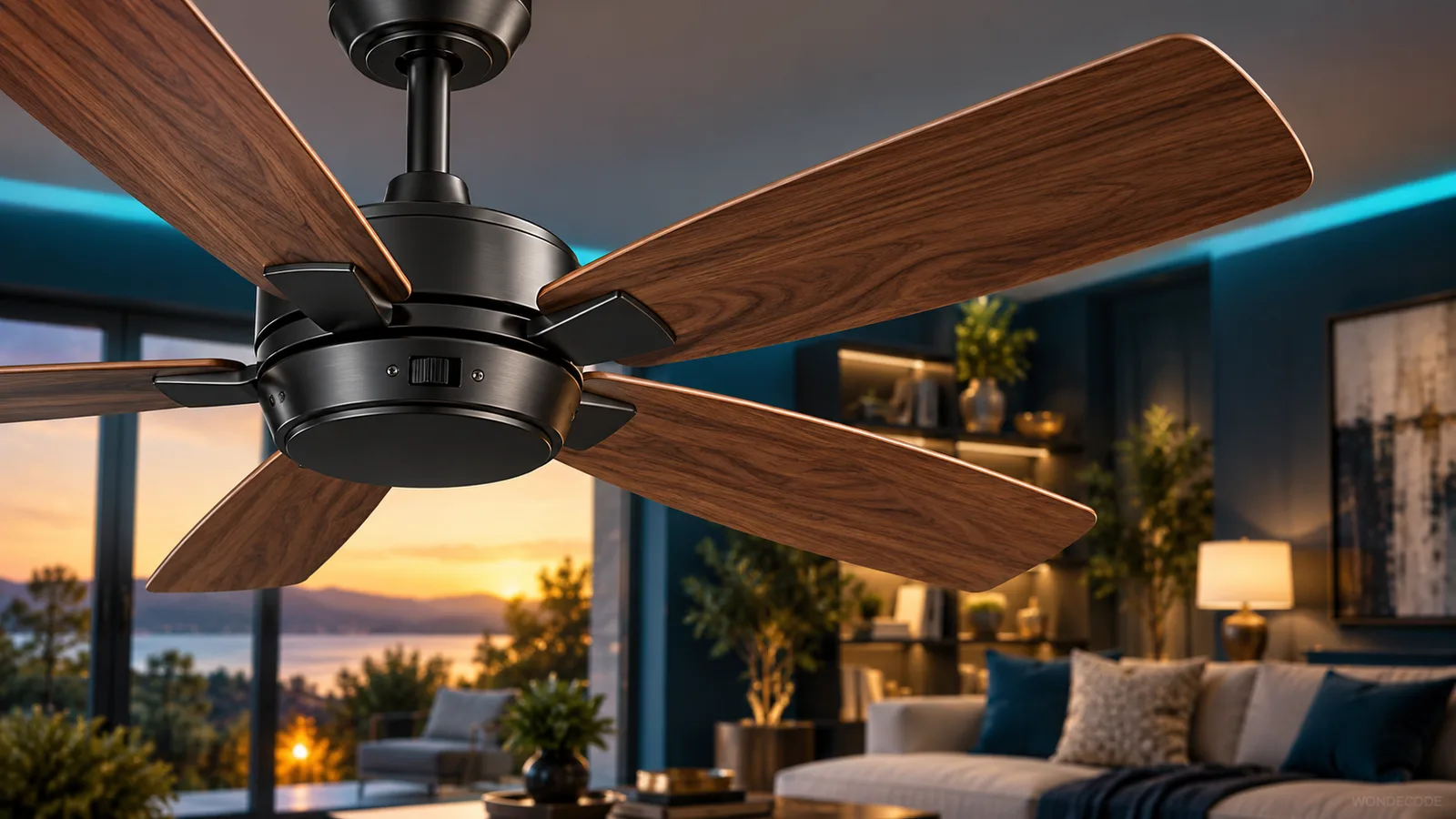
You probably know the speed control. You may have used the light switch thousands of times. The reverse control is easier to miss: on some fans it is a small slider on the housing; on others, the function lives on a remote or wall control. Hunter: Fan Direction and Reversing
In warm weather, you want the breeze
The familiar summer setting sends air down into the occupied part of the room. That moving air helps your body lose heat, making you feel cooler. The distinction matters: a fan provides a cooling effect for people rather than refrigerating the room. ENERGY STAR recommends switching it off when the room is unoccupied. ENERGY STAR: Installation and Usage Tips
For many conventional ceiling fans, the summer setting is counterclockwise when you stand below and look up. You should feel a downward breeze beneath the fan. If the direction looks confusing from across the room, use the viewpoint specified in your manual. Hunter
In a heated room, the goal changes
Warm air can collect near the ceiling. Reversing a suitable fan and running it slowly creates a gentle updraft that helps circulate that warmth back into the occupied space. The U.S. Department of Energy recommends clockwise rotation at low speed for winter use. Department of Energy: Winter Energy Tips
The fan is redistributing heat already present. It is not a replacement for heating. The aim is a more even temperature without a strong downward draft over the people sitting underneath.
On many models, the usual settings look like this:
| Goal | Typical direction, viewed from below | Airflow |
|---|---|---|
| A cooling breeze in warm weather | Counterclockwise | Down toward people |
| Redistributing warmth in a heated room | Clockwise at low speed | Gently upward beneath the fan |
These are common settings, not a substitute for your fan’s instructions. ENERGY STAR
Change the setting with the blades stopped
For a physical reversing switch, turn the fan off and wait until the blades have completely stopped before moving the switch. Restart the fan after changing the setting. This sequence appears in Hunter’s control instructions. Hunter: Controlling Your Fan
Do not assume that the slider’s upper or lower position has the same meaning on every model. Some fans have a dedicated reverse button; others use a particular remote-control sequence. Check your manual rather than guessing from the control’s appearance. Hunter
Choose the airflow for the situation
The seasonal names are a useful reminder, but the practical question is what you need: a breeze across your skin, or gentle circulation of existing warmth? In a warm climate without a heating season, the downward breeze may be the setting you use most often.
Before changing anything, find the control, check the manual, and identify the current airflow. That tiny feature may give your fan a job you have never tried.
Did you already know where your fan’s reverse control was?